Saturday, February 18, 2012

Watching Disney Movies as an 'Adult' is Fun! (Every Officer in Mulan is Terrible at War)

Mulan, as a movie, is all about war. The backdrop is a Hunnic invasion of China, every major character including Mulan herself is or has been in the Chinese or Hunnic militaries, and the movie concludes in triumph shortly after the Huns have been defeated. So that's settled. The problem, however, is that everyone involved is apparently horrendously terrible at the business of making war. 

This starts with the opening scene, when a sentry atop the Great Wall of China is surprised by what appears to be half the Hun army. 


How is that possible? Don't they send out patrols north of the Wall to, you know, give them some advance warning of approaching massive armies? And it's not even just the grappling hooks; as we see in a second, the Huns are already inside the Wall itself (how is not explained). 

 The brave Chinese watch commander manages to get to the top of the tower and light a signal fire, spreading the word that the Huns have come to China. "Now all of China will know you are here," he says defiantly, and Hun leader Shan Yu replies, "Perfect". 

"Perfect"? What, did he plan it this way? If so, why attack in the middle of the night when everyone is least prepared? If not, then why allow the guard to light the signal fire? What does he gain by losing the element of surprise? Later, Shan Yu explains his motivations to a hapless Chinese scout, saying that "By building his wall, [the Emperor] challenged my strength". This is presumably why he wants to fight the biggest Chinese army at a place and time of their choosing, to prove his strength, but that's a horrendous military strategy. Half of the point of war is not letting your enemy know where you are and what you're doing!

Anyway, that's just the first of many bad decisions. Shortly thereafter, Captain Shang's father, General Li, leaves to fight the Huns on a troop of white horses. Cavalry. He's a cavalry commander. So why in the name of Sun Tzu does he stop and wait at the Tung Shao pass for the Huns? On paper it's not an indefensible idea; if the mountains act as a natural barrier except for that pass, that would be a good place to stop the Huns. But they don't. When informed of this development, one of Shan Yu's aides says "We can avoid them easily". Therefore, there must be other routes to the Imperial City. Therefore, giving away the biggest thing any cavalry troop has going for it--mobility--in favor of sitting and waiting at the pass is stupid. They didn't even build any fortifications that we can see in the movie, choosing just to sit and wait in some village until the Huns crashed down on their heads. 

Shan Yu, of course, doesn't pick the "avoid the enemy soldiers" option. He attacks them head-on with all his strength and wins. We're not given many details about the battle, so it's reasonable to assume that there was some kind of strategic reason for eliminating China's best troops right there, as opposed to bypassing them and moving on to Peking. Still, it's hard to believe that most military commanders would choose to fight the enemy's elite forces on ground of their choosing when an "easily" used option to avoid them exists. 

The centerpiece of bad decision-making, however, is the movie's biggest military confrontation: the battle in the mountains. After discovering the rubble that used to be General Li, Captain Shang and his command head through the pass to the Imperial City, telling us that they're "the only hope for the Emperor now". (What, the whole rest of the Chinese army was twenty guys on horses?)  They're on their way through when Mushu accidentally sets off a cannon and gives away their position, as Shang yells at Mulan. 


The problem is, the Huns shouldn't have needed the cannon to see the Chinese! Look at this picture: 
Or this one: 
The Chinese army are moving dark figures on a field of pure white. Yes, they're in shadow, but they'd still be clearly visible against the snow. How did the Hun archers miss them? Especially since the only reason for them to still be in these godforsaken frozen mountains, let alone posted up on a peak overlooking the pass, is to be watching for Chinese reinforcements! If they're within bowshot of the Chinese party, it's not like they're out of sight, either. There's really no excuse for the Hun lookouts to miss the Chinese until the latter throw up a big, red, explosive "Hello I'm here, come shoot me!" sign. Also, Captain Shang just saw evidence that at the very least, a massive Hun army was here very recently. Why are the men in a straggling, disorganized line? At the very least, shouldn't they be prepared for battle?


But never mind that. After the arrows begin to fall, Shang gets the men to the safety of some rocks, where they reply with cannons. The cannons appear to wipe out the archers, and all is well. Then... THIS happens. 
The entire Hun army shows up and attacks. Apparently they were just sitting in the mountains and waiting for Shang's reinforcements to arrive. There is no logical reason why they should do that. In the first place, Shan Yu wants to sack the Imperial City. Well, it's right over there. There's literally nothing standing in his way from here to there. Second, nobody in the Chinese army command knows Shang is coming; Mushu issued fake orders to get Shang's company (?) into the fight. Shan Yu couldn't have known they were coming even if he'd captured and tortured General Li. Third, even if you wanted to have a rear guard just in case, why leave your entire army there? Why not just leave a few hundred soldiers and move on? Fourth, when you see that there are less than 20 Chinese soldiers, why (again) attack them with your entire army? Why not just leave, say, 150 men to deal with this pathetic little band while you're off destroying Peking?


There are other reasons why this is a terrible idea from a tactical perspective. Here's another picture of the Hun charge:
That little black dot out in front is Shan Yu, who apparently wants to kill all the Chinese himself, which you don't want your general to attempt for obvious reasons. Look at that vast, snow-covered expanse, though. All of those Huns are charging down it, which means their horses are going to be at least tired when they reach the bottom, if not dead from falling down hidden pitfalls or crevasses in the snow. But more to the point, from the fact that they're charging and the fact that they're going downhill, it's going to be very hard for them to stop. This is bad because... 
...they're charging towards a sheer cliff. And the people they're trying to kill are basically standing right on the edge of said sheer cliff. I don't blame Shang that much for picking this horrendous tactical location; it's understandable, given that he was trying to find cover from arrows at the time and that was the only available spot. That's relatively forgivable. But Shan Yu, once again, is charging towards a fucking cliff. And lest we forget his lesser sin, the people he's trying to kill are concealed amongst giant rocks, meaning that the horses will be relatively useless and might even break legs or whatnot if they, y'know, continue to charge straight at the Chinese and into the friggin' rocks. Rocks and a sheer cliff: yep, looks like charging down the mountain was a great decision.

 And the thing is, from Shan Yu's vantage point, this is all completely known. He starts the battle probably one or two hundred feet higher, elevation-wise, than the Chinese do, so at the very least he should be able to see that the land abruptly ends. Plus, he's had the opportunity to survey the terrain, having been here first. Which essentially means he picked this spot and picked this excuse for a strategy in advance.
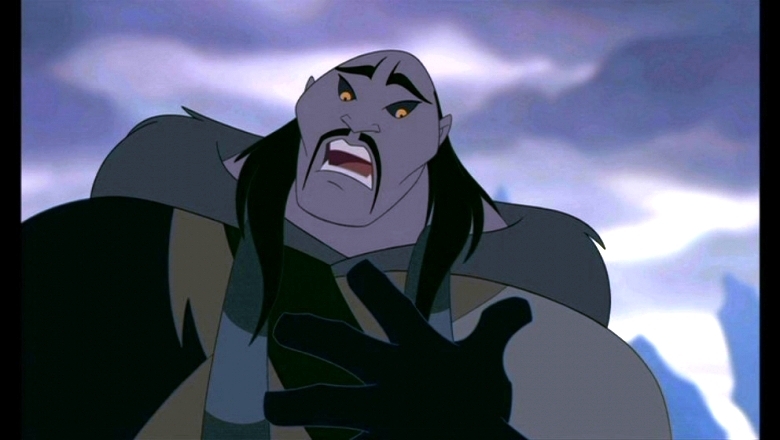
Who knew that picking a psychopathic murderer to lead your army could be a terrible choice? It's not like Li or Shang do much better, though. All in all, this might be the most ineptly fought Hun-Chinese confrontation in 'history'.

Thursday, February 9, 2012

Nine Things I Learned In Israel

I spent around ten days in Israel over winter break, courtesy of Taglit-Birthright Israel and the Hillel organization. These, and what will probably be successive posts, are some of my impressions from there.

1. The deserts are absolutely beautiful. Especially if you’re a tourist who doesn’t have to actually live there, but I mean, wow. Especially for a flatlander like myself, the mountains and all that bare earth and rock are incredible.

Click for a larger version. These mountains are southwest of Masada.

2. It isn’t all desert, shockingly enough. Above the Negev in the south, Israel isn’t lush by any stretch, but it’s also not barren. There’s plenty of arable land, as well as… palm trees and all kinds of desert plants. (Probably should’ve expected those, but seeing something I’m utterly used to seeing, in California anyway, on a foreign continent shocked me out my metaphorical shoes.)

3. Israeli architects just do not give a fuck. They will build whatever they feel like and to hell with your ideas of architecture. Balconies everywhere, buildings that meet in the middle and have huge gaps below, high-rises that look like they’re going to fall over any second because it goes out where it should go up and you’re just open-mouthed as you pass it on the bus, wondering how does that even work?

4. This occurred to me specifically in the Old City of Jerusalem, although I suppose it applies well to the country as a whole. Somehow it never occurred to me that so much history could be concentrated into such a small geographical area. I mean, you go to the Old City and pass through the gate, and suddenly the Church of the Holy Sepulchre is right over there. Probably the most holy site in Christianity (feel free to correct me on this), and it’s not more than half a mile from the Temple Mount and the Dome of the Rock. And then over there is the biggest synagogue in the city, and over there is a Jewish cemetery that’s been in use for three thousand years, and, and… I can’t get over it. It just seems so small to contain so many unimaginably meaningful places, and more to the point, where so many unimaginably important things happened long ago.

5. On a related topic, the Old City has to be the best parkour city in the known universe. Bar none. Once you get up on the roofs, a lot of them are basically contiguous and you can just run across them. Then there’s plenty of gaps, places where you can drop down to or below street level, railings to flip off of and things to climb up on… I swear, give the parkour elite a month of lenience from the authorities and a large sum of cash, and you could organize the most mind-blowing exhibition of parkour the world has ever seen.


Like this, only with multiple levels above and below the main streets.

6. On an unrelated topic, Israelis love cucumbers. Absolutely love them. I don’t think I saw a single meal—at hotels, at the kibbutz, from roadside vendors, in the middle of the desert, etc.—that didn’t either have sliced cucumbers somewhere or incorporate them into at least one dish.

7. The dish of choice there is shwarma, which is one of the de facto national foods. Basically you take your meat of choice (lamb, beef, chicken), throw it in a pita, add hummus, hot sauce, cucumbers, tomatoes, French fries (called “chips” there; thank you, British Mandate) and whatever else you want and serve piping hot. It’s kind of the best food: both delicious and a challenge, since the pita tends to fall apart as you eat it. (Those are the cheapest, but you can get intermediate- and expert-level bread products in which to wrap your shwarma as well. I have yet to level up sufficiently.)

8. Another shwarma anecdote—Most places use a rotating vertical grill to keep the shwarma roasted, juicy and warm so they can serve it at any time. Seen for the first time, it looks like some kind of enormous leg of mammal, like mastodon or something, because they don’t have individual carcasses hanging up. They just have this huge composite leg of lamb or whatever. The first time I saw it, it had chicken, beef and lamb legs turning side by side, three feet tall and maybe nine inches thick, and I had no idea what I was looking at. (Speaking of which, lamb is much more common and less expensive than chicken. It’s the little differences that astound you.)

9. You can learn about globalization in a classroom setting, you can read about jobs going to India or components from China or the homogenization of cultures due to it, but you don’t viscerally understand the concept until you’re standing in the middle of a Bedouin encampment in the middle of the Negev Desert, in Israel, in freaking Asia, and staring at the same make and model of paper towel dispenser as they use at your college. Made by Kimberly & Clark. I checked.

10. If my plans for my life go up in smoke, if everything goes wrong and my career lies in ruin and I have no options left for what I want to do, here's one of my fallback plans: I'm gonna move to Israel, I'm gonna open a factory, and I'm going to make barbed wire and concrete. My darkly comic observation during the trip was, "They're not going to run out of demand for those in the foreseeable future..." (Kidding. Mostly. We passed by a cement factory on the way to Tel Aviv, and some of my friends chorused "Andy, they stole your idea!") More to come.

Sunday, January 29, 2012

The Bluff British Man

Let me tell you about a character archetype peculiar to British media: the bluff British man.

The bluff, beefy British man is typically in his forties, with some muscle and some bulk to him. He’s not a prizefighter, but he’s physically capable. He’s a family man (that’s very important), with a wife and kids, typically at least one son. He is not inclined to understanding. Let me put it another way: He rules his family by prestige. He is the provider, the breadwinner, and by God if he has to go out and work for his crust, he is going to get the respect he deserves from his family when he comes home at night. That’s not usually a problem with his wife, but it is usually a problem with his son. Instead of trying to understand his son, he generally tries to browbeat and bludgeon him (verbally speaking) into submission, which of course only makes the son angrier. He won’t hesitate to use, or at least threaten to use, his physical strength in cases like these.

The most important thing for the bluff British man is maintaining that status of domineering respect with his family, and by extension, with any group of people he might happen to find himself in. In addition to all of his above qualities, he’s also not very clever or smart. He often finds himself intellectually overmatched, and his primary response to such a situation is to try and overbear his way out of it. It must be noted, however, that he is also very protective of his family.
Ultimately, the bluff British man is a very self-centered and insecure person, who cannot allow his façade of outward authority to be tarnished. At any such tarnishing, he must strike back and prove his primacy. See the Doctor Who episode in Season 2, “The Idiot’s Lantern”, or J.K. Rowling’s Vernon Dursley for examples.

Now consider this character in the light of the man in “Midnight”, Biff Cane. (Even his name suggests physical force; ‘Biff’ used to be a common sound effect in cartoons and comic books.) He begins the ride with his wife, but with his rebellious son ensconced in the other seat. That’s okay, as long as he can socialize with the rest of the group and crack wise and make people laugh. As long as he’s telling the slightly self-deflating story, it’s okay. One could even see it as him taking control of his own image and saying, “Here, look, I can laugh at myself. That makes me even more solidified.”

When trouble starts, however, Biff is as scared as anyone else. But he has to cover that to protect his image, and also to protect his wife and son. So he puts up a blustery, bluff exterior, and advocates a hard-line stance against the creature in Skye, up to the point of throwing her out the airlock. This naturally puts him in conflict with the Doctor, and here’s where things get interesting. The Doctor wants to keep him in check, needs to keep him and everyone else in check in order to avoid violence. But because everyone’s scared, and because Biff’s anger is based on fear, there’s no way the Doctor is going to intellectually argue him out of this. Biff just remains set in his opinions, and keeps agitating for the death of the creature. The Doctor gets frustrated by this, and eventually tries to assert his (well-earned) primacy in the group, first by saying he’s clever, then by saying that to get to Skye, they’ll have to go through him first.

That’s a mistake. Immediately after the Doctor says “Because I’m clever!”, Biff takes it as demeaning to him. He assumes that the Doctor is trying to degrade him and assert his own status as the alpha male, which he essentially is, although for good reasons. And when the Doctor challenges him, asking if he would really, honestly throw another person out of the airlock, it’s not about Skye. Biff has written her off by this point anyway. It’s about, “Am I going to let this guy show me up? Am I going to let him tell me what to do?” and his answer is, “NO”. Thus begins a hard core of resentment and anger focused on the Doctor, which will not go away until the end of the episode.

He can’t allow the Doctor to be cleverer than he is. The Doctor is clearly more literate, as shown by the Christina Rosetti comment, more experienced and smarter than Biff can even hope to be. He can’t allow the Doctor to supplant him. And while those aren’t the only reasons why he eventually wants to throw the Doctor out the airlock, they are the big ones that explain why he’s so solidly behind it. He needs to prove himself in some way, and the last reservoir at his disposal is physical force.

The biggest takeaway, in terms of how you should view the Bluff British Man, is that he is scared out of his mind. He tends to be a very insecure individual. Vernon Dursley, Biff, the Idiot’s Lantern guy—all of them are terrified of the strange things entering their relatively ordered universe. Their only out, their only escape, is to get angry and assertive and hope to bluff their way through things by yelling at them. They are psychologically incapable of understanding either the situation they’re in or the other people in that situation, because they’re trapped so deeply inside their own heads. The thing is, approaching them from that direction only enrages them further, because they find it emasculating. Once you understand the Bluff British Man’s motivations—his fears and his desire to not appear weak in front of his family—his behavior suddenly becomes very understandable, even moving.

Friday, January 20, 2012

Tisdel's Law

My experience has shown me that for whatever reason, people who love sports strongly tend to love politics as well. That may be partially a product of the competitiveness of each, or the fact that the linguistics of each tend to creep into the other (witness Newt Gingrich saying he's "at his best in the fourth quarter", or the name "Spygate" for Bill Belichick's videotaping scandal a few years ago), but those two demographics just tend to overlap strongly. It's been my observation that conversations between people astute in both areas tend to bleed over into one another, which leads me to Tisdel's Law. 

Weak application of Tisdel's Law: All conversations that begin by talking about politics will inevitably segue into talking about sports. (Jon King, moderating the GOP Presidential Debate last night, did it right at the start by mentioning he was rooting for the Patriots this weekend.)

Strong application of Tisdel's Law: No matter how they start, all conversations that begin with either politics or sports will end up incorporating the other field. 

Tisdel's Law has been demonstrated repeatedly during conversations within my friend group and political discussion group, the League of Informed Voters. (The name isn't mine, by the way; I believe my friend Dick gets credit for formally naming the phenomenon.) I'm currently trying to scrape together funds for a wider study. Tisdel's Law is predicated on my observations at the following places: Wooster, OH; Washington, D.C; Milwaukee, WI; and various televised coverage of Presidential candidates/Congressional races, all of which indicate that interest in politics and sports tend to go hand in hand. Tisdel's Law should not be used to place bets; any such responsibility is yours.

Monday, December 26, 2011

Are Hergé's Tintin Comics Racist? Of Course They Are.

Let's get the bias-clearing part out of the way right up front: I love Tintin. I've read pretty much every Tintin story ever published, I own most of them, and when I was very small my dad and I used to read them. He'd be Captain Haddock, I'd be Tintin and we'd narrate our way through each adventure, sitting side by side in my big yellow chair. (It took forever for me to figure out why Andy Serkis's Captain Haddock sounded weird in the trailer; it's because he doesn't do my dad's distinctive pronunciation of things like "Blistering barnacles!")

As a lifelong reader, I think I have a decent say in the debate over whether the Tintin comics are racist in their portrayals of people who aren't white Europeans. My answer? Yes. Duh. Absolutely. Of course. Let the apologists argue over whether it was on purpose or whether Georges Remi was an innocent product of his times; I prefer to cede the debate entirely by admitting what is plainly obvious: Tintin, as a comic, is racist through and through. One has only to look at the Congolese of Tintin in the Congo to see this. For further examples, I recommend the black crew members of Cigars of the Pharaoh, the Muslims of The Red Sea Sharks, the hired guns of Rastapopulous and his gang in Flight 714 and dozens more. 

Tintin himself is vehemently anti-racist, and is often seen sticking up for downtrodden locals over the objections of imperial powers (see: Zorrino in Prisoners of the Sun, Chang in The Blue Lotus). The trouble is that said locals are always portrayed as incapable of protecting or defending themselves, and in need of Tintin's intervention for their own safety. You could make similar cases about the inefficencies of provincial governments around the world that Tintin travels to, the political instabilities in various regions (the Balkans, the Middle East, South America) that Tintin regularly soothes, and so forth, but that's not the point. 

The point is, if you get caught up in the comic's racist tendencies, you're going to miss just how freaking good it can be. Tintin is an adventure hero, and he's a bit of a Mary Sue for pre-teen boys; without much of a personality of his own, he travels around the world, fights crime and solves mysteries. Who wouldn't want to put themselves in his shoes? The comic is drawn well, the stories are decently complex and frequently comment on issues of the day, and there's plenty of comedy (from Captain Haddock and Thomson and Thompson, among many other sources). It's all right to label Tintin as racist; that's what it deserves. But if you pigeonhole it away with Rudyard Kipling and Doctor Doolittle and all the other racist literature that also happens to be very good, you're missing out on some eminently readable and visually stunning childrens' tales.

Sunday, October 23, 2011

Review of "Womb"

"Fuck that movie." -Sid

Womb is aggressively bad. It appears to have been made by hipsters, for hipsters, with the sole goal in mind of being spectacularly boring. Its lone virtue is the beautiful high-definition camera, which is used to good effect in most of the shots. Beyond that, however, Womb is just terrible.

The movie is a character drama that focuses on the lives of Rebecca and Tommy, in both of his incarnations, but by the end you really know very little about their characters. Rebecca is simply emotionless, staring blankly at her fellow actors for most of the movie, and Tommy isn't much better. It's impossible to relate to them.

Director Benedek Fliegauf's cardinal sin is prolonging shots far, far longer than they need to last, particularly shots of Rebecca staring at Tommy (or anything, really). They're consistently 30 to 40 seconds long and nothing happens in them but the actor staring vacantly, or yet another shot of the house Tommy and Rebecca live in. These aren't a momentary artistic diversion, either; they occur frequently throughout the movie. There's just so much wasted time that could've been used for dialogue, of which Womb has very little. Also, there's virtually no music and no background noise in these shots, so they're just downright boring. If you've seen the cover art with Rebecca staring at something off-camera, you've seen probably a solid 15 minutes of the movie.

I suppose Womb's persistent tendency to convey surpassing awkwardness is a point in its favor. However, there's really no scene in the entire film that isn't skin-crawlingly awkward in some way (Rebecca's staring and the long shots convey this well). It's an awkward subject anyway; I mean, the world's biggest Oedipal complex in Smith combines with the world's most obsessive person in Rebecca. I've seen reviews arguing that it's heartfelt and adorable because of the length Rebecca goes to regain her lost love; I vehemently disagree. Because of Rebecca's lack of character, the act of cloning and raising Tommy comes across as simply creepy rather than something she's doing out of love. (Tangent: I also see Rebecca as one of the most thoroughly selfish characters in cinema, but that's another story. Her selfishness is her defining trait.)

Also, Fliegauf's directing contains perhaps the most heavy-handed use of symbolism I have ever seen. The only thing he doesn't do to get his points across is putting them in a subtitle at the bottom of the screen. Example: Tommy is conflicted about whether he should be with Monica or Rebecca. We know this because there's a shot of both their bedroom doors, which are right next to each other. Both doors are open and both women are lying disconsolately on their respective beds, and Tommy walks between them, then leaves. This takes about a minute and really doesn't deserve 10 seconds.

So, that is Womb. If I've left anything out, it's that the dialogue could probably have been written in about two or three hours by a writer who wasn't concentrating very hard. There's nothing striking, witty, clever or even memorable about any of the lines. Most often the lines aren't even there, replaced by vacant silence where human interaction is supposed to be, and also where people could've justified their actions. Why did Tommy-2 bury the dinosaur? Why did Tommy-1 randomly strip down and jump into the ocean? Why did Rebecca take a solid 12 seconds to seductively eat a banana? How did Tommy-1 become, of all things, a cockroach breeder? These answers just aren't there. Arguably, it's for the viewer to answer these questions, but for me it just felt like apathetic storytelling. On a scale from "I utterly wasted my time" to "You must spend every waking moment of your life seeing this movie", Womb is pretty close to touching the bottom. Don't go here.

Friday, October 21, 2011

Cops Killing Animals: Zanesville Tranquilizer Controversy

The big Ohio story over the last few days involved an exotic animal owner who opened the cages of his private menagerie and then shot himself. The escaped animals included lions, tigers and bears (of course), wolves, baboons and monkeys. All were hunted down and shot. This has sparked some minor controversy about whether the animals should've been tranquilized instead, an argument which ignores both the facts of the escape and the practicalities of doing so.

First of all, police officers are not equipped with tranquilizer guns as part of normal procedure. The deputies that responded to a call of escaped wild animals carried assault rifles, as well they should have. There was no time to get the required equipment together, and waiting around to do so would've raised the possibility of an escaped animal injuring or killing someone in the meantime. This is plain and obvious.

Secondly, it took until Wednesday night to deploy experts with tranquilizer guns (the animals were turned loose on Tuesday). Should the police have simply let the animals run free in the meantime? Of course not. This is, again, obvious.

Thirdly, note the word 'experts' in the paragraph above. It's not simply a matter of handing guns to cops, once you get the guns, and telling them to tranquilize all the animals they find. The user of a tranquilizer gun basically needs to be part anesthesiologist, according to this site. You have to calculate the dosage based on approximate body weight, species and the concentration of the drugs you're using, which is an inexact process. And since (as a now-armed cop) you don't know exactly what animal you're likely to encounter, and thus what dart you'll need, there's a major risk to the cop AND to the animal. Shoot a dose intended for an elephant into a monkey, it probably dies anyway. Shoot the monkey's dose into the elephant, you just make it mad. And expecting somebody who's not trained with that piece of equipment to get it right, under pressure, for every animal is an unacceptable and unreasonable demand. I'm not saying I like the idea of exterminating the animals, but killing them on sight was by far the best way to ensure that nobody got hurt (and indeed, nobody got hurt with the exception of the owner, who apparently committed suicide).