Tuesday, May 31, 2011

Why is Marvin Lewis Still the Bengals' Head Coach?

I understand that Lewis, in getting his contract extension on January 4th, got a huge assist from the at-that-time-impending NFL lockout. Keeping your eight-year veteran head coach and assuring yourself some organizational stability in the face of a possibly shortened offseason must've looked much better to owner Mike Brown than hiring a new guy at the wrong time. But why have the Bengals kept a guy who's never been that successful?

Here are the records from Marvin Lewis's eight seasons as Bengals head coach, in chronological order: 8-8, 8-8, 11-5, 8-8, 7-9, 4-11-1, 10-6, 4-12. He's 0-2 in the playoffs. Total record is 60-69-1, counting playoffs.

In addition, the Bengals have been sort of a perennial joke for three reasons: their players' willingness to mouth off to the media, the team's willingness to pick up 'troubled but talented' players who've had run-ins with the law (example: Tank Johnson, Terrell Owens, Pacman Jones, Cedric Benson), and the Bengals' own arrest record. They apparently lead the NFL in arrests during the 2010 season, including 22 during Lewis's tenure.
Also, snake wrangling.
So I'm kind of wondering, why exactly do the Bengals keep Lewis around? Why have they been satisfied with two winning records in nine years? I'm speaking as a Packers fan, and we generally have high expectations for our head coaches (the '70s and '80s notwithstanding). When Ray Rhodes posted an 8-8 record in his first year, 1999, he was fired the next year. When Mike Sherman's team crashed into 4-12 after four straight years of 10+ win seasons and playoff appearances, he was fired instantly. Lewis has hung around for eight years despite everything I mentioned above. So what's the deal here?

My best guess, and I swear I'm trying not to sound like an ass here, is that the Bengals don't have the history or standards that Green Bay does. Seriously. Cincinnati has never won a Super Bowl (they went in '81 and '88, and got killed by Joe Montana both times), and they have a 285-373-2 all-time regular season record. In addition, before Lewis's squad went to the playoffs in 2005, they hadn't been to the playoffs in 15 years. My guess is that occasional division championships are better than no division championships at all, at least in Paul Brown's thinking. The arrests, Chad Ochocinco's mouthing off in the media, etc. are just part of the culture there. That's my best explanation, anyway, for keeping a coach with a pretty mediocre record around as long as they have without much success.

Bonus Black Hole Note! The Enterprise Was Never In Any Danger!

At the end of Star Trek, the Enterprise is caught in the gravitational well of the black hole, seemingly inescapably so, and escapes only by ejecting what's basically a huge bomb into the black hole and riding the blast wave out (undamaged). SPOILERS.

"aaaaaaah..."

"CHOOOOOO!!!"
If warp speed is faster than lightspeed (which it is), the Enterprise should be able to escape the black hole without all the histrionics, like firing the warp core (which apparently isn’t strictly needed for the ship to go into warp) into the black hole FOR INSTANCE.

Here’s how. The Schwartzchild radius defines the area within which you would need to exceed the speed of light to escape, and so constitutes the effective boundary of a black hole (since we can’t see anything inside because light cannot escape). The Enterprise isn't within the Schwartzchild radius. We know this because nothing can escape once it's inside the event horizon (same thing, but sounds cooler) of a black hole, yet even when his ship has almost been swallowed, Nero is able to send transmissions to the Enterprise. Thus, the event horizon is the actual black border that we see on screen, and anything forward of that can still escape, and the Enterprise never crosses that line.* Therefore, the escape velocity that the Enterprise needs to attain should be less than the speed of light. Therefore, since warp speed exceeds lightspeed, the Enterprise should be fine,** and no huge goddamn bomb is necessary!****

Hooray! Now Kirk can go contract more alien STDs!
*Supplementary reasons: We (the camera) can see the Enterprise, so it hasn't passed the event horizon because the light reflected off of it can bounce back to us. Also, the accretion disk of the black hole helps define its boundary, which the Enterprise doesn't cross. What was it formed out of? I have no idea, since there was no matter around at the time other than Nero’s dead ship (which went straight in) and the Enterprise itself. Regardless, it’s there, and that provides a crude way of telling at least where the Schwartzchild radius isn’t. The disk will be outside the radius, and the Enterprise is outside the disk.

**Not to mention, since warp speed exceeds lightspeed, the Enterprise could theoretically be within the Schwartzchild radius and still be able to use its normal warp engines to escape. It's a question of how far they would be able to go into the black hole.***

***The movie ignores the "spaghettification" thing--the thing where the pull of gravity on the part of the ship closest to the black hole will be stronger than the pull of gravity on the farthest-away part, so the Enterprise will start to stretch out like a strand of spaghetti as it gets closer to the black hole--so I see no reason why I shouldn't ignore it as well. Phooey on you, spaghettification.

****One more thing: They hurled the huge bomb into the black hole, into the event horizon itself! Nothing can fucking escape the event horizon unless it has a magical warp-drive, and no matter what radiation the explosion generated, its maximum speed would still be the speed of light! Thus, it couldn't escape! Thus, that entire explosion in space is a crock of shit!*****

*****Done now, but there's another one coming. Hold onto your helmets. Also, celebratory penguins again!

Monday, May 30, 2011

Red Matter: Trying to Explain Black Holes in Star Trek

Preface: I KNOW that Star Trek (2009) played merry hell with all sorts of physics. I'm not trying to explain how contrary they run to regular, ordinary physics; that's just too damn easy. What I'm going to try to do is explore their black hole physics, and see what the implications are when you bring them into line with the parts of black hole physics that they didn't explicitly rewrite. It's... oh, forget it. Just read on. Or don't. Whatever makes you happy.

The plot device J.J. Abrams came up with in the film is called "red matter", which is apparently different than any other matter that reflects red light.

This isn't a wayward red blood cell, it's black hole fuel!
The basic idea seems to be that when the red matter is released into something, it creates a black hole. But there are conditions under which it won't; you can keep it suspended in a tank, even poke it with a needle and take some of it out, and it's stable. It only turns into a black hole if you provoke it, much like your adorable cat, who will only turn into a hissing, spitting ball of painful death if you step on his tail. Otherwise, he will be calm, serene, and float peacefully in midair (as many cats do).

The trigger for red matter seems to be making it interact with a massive body, such as a ship or a planet. You can't just set a trigger on it and tell it to become a black hole, it has to actually hit the massive object. Moreover, I think it is best used at the spot in the object where matter is most compressed by its own gravity. Namely, the center. This is why Nero used his giant drill to bore down to the center of Vulcan, as opposed to just hurling the red matter at the planet's surface.

Here's where it gets interesting, though. The black hole that's produced has no correlation to the amount of red matter that's used. For example, observe this photo of the planet Vulcan collapsing into the black hole at its core.

Here it is again, a second later. You can see the last remnants of the planet at the center, and then the patch of darkness in the center of the frame that defines the Schwartzchild radius (effectively, the boundary of a black hole).

So the black hole that's produced, by a tiny drop of red matter, is approximately planet-sized. Compare that to the black hole produced when the entire huge case of red matter impacts Nero's ship:

The black hole formed in the middle of Nero's ship; that's why it's on both sides.
Sure, it looks big, but that ship is at best comparable to a big asteroid. Certainly not moon-sized, or planet-sized. The black hole produced from all that red matter was only about the size of the ship!

This leads me to believe that the amount of red matter is irrelevant. What matters is the thing the red matter is used on, and how much mass it has.

Now, this presents a bit of a problem. The black hole produced is not directly correlated to the amount of mass the object has.

Let's assume Vulcan, shown collapsing above, is about the size of Earth (for convenience's sake). If Earth collapsed into a black hole, the black hole produced would be smaller than a grape. A stellar-mass black hole--a black hole with the approximate mass of our sun--comes from the collapse of a star with 25+ solar masses. Yet the red matter made Vulcan collapse into a planet-mass black hole! Thus, red matter must work, not by collapsing the mass already present to its natural Schwartzchild radius (all masses have it; it's theoretical in nature, kinda), but by acting as a multiplier for the mass that's already there. It multiplies the mass of the object it's used on until the radius of the black hole that'll be produced is equal to the radius of the original object.

We can even work out what the multiplier is, within reason. Here's how I did it:

The Schwartzchild radius of an object (what it would be, with its mass, if it were to become a black hole) is about three kilometers multiplied by its mass. Now, the radius of the Vulcan black hole (if Vulcan is Earth-sized) is about 6384 kilometers, since that's the radius of Earth. Divided by 3, that means that you would have to have 2128 solar masses to create a black hole that size!

Earth's mass, obviously, isn't anything even close to a stellar mass. According to Wikipedia, it's about 332,950 times less than the sun. So if we multiply 332950 by 2128, we get 708,517,600. That's the multiplier of the "red matter", if my theory is correct. When the red matter hits a massive object (planet, ship, whatever), it multiplies the mass by 708,517,600 times, causing it to collapse into a  black hole that has a Schwartzchild radius precisely equal to the original object's actual radius.

This is how red matter works. Thank you and good night.

Here's some celebratory penguins!
(Obviously I've had to make some assumptions; Vulcan is supposed to have a stronger surface gravity than Earth, for example, so it's reasonable to assume that it's heavier. However, fuck it, I didn't exactly have precise numbers to work with. And whether the red matter number is the exact multiplier or not, the important thing is I've got a good idea of how the mechanism works and what the multiplier is within experimental error. That's a decent starting point.)

Sunday, May 29, 2011

Babylon 5 Eye Rant

Okay. Minor spoilers that come in Season 2, Episode 16: One of the major characters on this show has a pair of black "shadows" following him around that are alien beings. They can be seen only if you look at them in ultraviolet or infrared light (the show isn't clear on which). Until the Captain (who is human) employs special scanning equipment to view the other character and his attachés, nobody on Babylon 5 has seen them.


This is bullshit. Bogus. Bad storytelling. Why?

First of all, there were plenty of opportunities for the creatures to be seen (the character doesn't shun public places) and we're told that the creatures never leave his side, so it's clear that they could've been seen. We're also told that these creatures are hugely distinctive and feared, so there would've been some noticeable reaction if they were seen.

The second reason has to do with the other aliens on this show. This is a Star Trek-type universe where most of the aliens walk on two feet, have two tool-using hands, speak English with only a mild accent and the biggest apparent difference is some makeup on their faces or heads. And that's perfectly fine, even if it's wildly implausible. The thing that allows me, the viewer, to pretend that they are alien--even when they all look basically human--is our lack of knowledge about them. Why do the Centauri have oversized hairpieces? What is the function of the ring of bone on the M'bari's heads? Is there a pattern in the Narns' spots, and what purpose might it have originally served, evolutionarily speaking?

Did they all just have a horribly bad application of suntan lotion?
The point is, what we're seeing may not be what the aliens are exactly, and that helps preserve some of their intrinsic alien-ness. But the business with all of these alien species--over 20, we're told--being unable to see the creatures is frankly just bad storytelling.

Hands I can accept. English I can accept. But there's absolutely no reason why every one of these species should see in the same range as humans! The visual spectrum, colors red through indigo, is totally arbitrary; it's just how our eyes are adapted! There are plenty of creatures, even on Earth, that see in the ultraviolet or infrared ranges, or even beyond, and that has to do with how they've had to adapt. Is it plausible to imagine other races on other planets growing up in different environments than us, under probably different starlight, and having the exact same eyes that humans do?


I don't think it's a huge deal, and we may very well find out that the Shadows cast some sort of distortion field, or protective camouflage for whoever looks at them, or something of that nature that would explain the lack of alien eye diversity. But for now, it just feels like Babylon 5 is getting kind of sloppy.

(P.S. Space was at such a premium that they were charging the officers money for their own quarters a few episodes back, but B5 has room for an entire baseball field?)

Thursday, May 26, 2011

Alternate Material for "How To Train Your Dragon"

How to Train Your Dragon is a filmic bildungsroman, a coming-of-age story for an outcast boy who, instead of being changed by an authoritarian society, manages to change it instead. Similar stories are all over Hollywood, but this one stands out because of the setting, the graphics and the music. I have, however, a few (rather dark) ideas for how it could stand out even more (this is incredibly cynical):

Possible Scenario I: 
Upon first encountering the downed Nightfury, squeamish protagonist Hiccup overcomes his misgivings and stabs Toothless (the dragon) in the neck. A dizzy mixture of sick and satisfied, he brings his father Stoic out to look at the corpse, and instantly gains acceptance into the Viking clan. Downing the Nightfury, which has never before been seen, much less killed, earns Hiccup enormous prestige in the village. Queries about how he did it soon turn to praise for his dragon-capturing device, and Hiccup's considerable mechanical talents are directed towards forging new weapons of war.

The village is able to drive the lesser dragons away and attain a stalemate with them; the other dragons compensate for the decline in sheep (which they feed to a giant dragon overlord) by catching more dolphins, sharks, swordfish, etc. to feed to the overlord dragon instead. This results in a boom in the oceangoing predators' prey fish populations, making the village prosperous for the first time in years. Meanwhile, Hiccup remains deeply troubled over the death of the Nightfury, but his quiet suggestion that the dragons might be more than just monsters goes unheeded. Forced to keep on killing the creatures he secretly loves, Hiccup eventually commits "suicide by dragon" and allows himself to be burned to ash during a dragon attack.

Possible Scenario II: 
Stoic's ship never returns from his attempt to find the dragon's nest. A grieving Hiccup saddles Toothless and goes out to search for his father, but is unsuccessful. Astrid sees Hiccup leaving on Toothless's back, and spreads the word in the village that Hiccup is riding a dragon. When he returns empty-handed, the Vikings conclude that he's in league with the dragons, and that he told them how to find and sink the Viking ships. Hiccup is forced to flee the village with Toothless and carve out a new life for himself on a neighboring island.

Hiccup and Toothless are being forced to leave their loved ones behind, forever. That is why they are scowling.
Possible Scenario III:
The movie ends as it does on screen, with Vikings and dragons living in harmony, and the credits roll. Five or ten years down the line, the Vikings (who have been fighting the dragons for generations, and now have no enemies) get restless. Their warrior-based culture begins to come apart. A young, charismatic leader plays on these feelings, and pointing out that the Vikings are now experienced dragon riders, calls for a campaign of conquest against all nearby settlements, using the dragons as weapons of war. Hiccup frantically tries to stop the crusade, but is powerless to do so, and can only watch as the pets he knows and loves slaughter thousands of people in other, nearby settlements (and eventually all the way to Britain).

Ain't it fun??

(Bonus scenario, if this movie was made in a culture with different values: Hiccup learns to accept that while he may not like his father's path, it is the one he is obligated to follow, and eventually becomes a productive, reasonably normal member of Viking society. Instead of setting out to change his home culture, he bows to it.)

Wednesday, May 25, 2011

Why Game of Thrones is So Damn Good

For the first time since Lost and 24 went off the air, I'm hooked on a TV show that's currently being televised, and I thought I'd take a second to talk about what makes it so good (for me). It's not the characters, it's not the epic fantasy setting or the big budget or the excellent adult acting or the snappy writing or the complex plot or the music or the surprisingly-good child acting (I grade child actors on a massive curve because children, including me, are idiots; still, this series relies on them quite a lot, and they don't disappoint). No, the biggest positive quality for me is the fact that this series is airing on HBO, and everything that that allows the show to do. It is an entirely different kind of television program than 24, or Lost, or Criminal Minds, or anything else that airs on public TV. This is my first exposure to it, and I very much like what a good show can do with the format.


The biggest thing is that when HBO puts a show in an hour-long time slot, you get an hour-long piece of television. There are no commercial breaks, and thus, no need to have a minor cliffhanger at the end of every segment so the audience waits through the commercials instead of flipping channels. The episode can flow exactly the way the director wants it to flow, building tension where he wants instead of where he has to put it. I never realized how much of a handicap that could be, and seeing a show without it is like watching someone who's just shed his training weights from ankles and wrists move around. It's so casually good.

Here's another huge advantage: Instead of 42 minutes in the hour, the director gets 57 or 60. That gives time for more plot twists and introductions and the like, but we also get more character development than you could ever pack into a network show. We get these wonderful, Stanley Kubrick-esque conversations where the characters can talk about nothing at all, reminisce over war stories or tell dirty jokes for awhile, and the audience can just sit back and watch as we wind around to the point of the conversation. There's nothing in this show that seems forced or too fast. Every conversation doesn't have to be filled with plot-specific stuff (stuff that isn't plot-specific yet, anyway), and every character doesn't have to talk at once. It makes world-building that much easier.


You know what else helps with world-building? Here's a sampler: Shit, fuck, boobs, sex, gore, and a heaping helping of REALISM.The camera doesn't shy away from gore, or nudity, or cursing. None of those would be possible on network television. But all of them are there, in abundance, in an HBO show. And far from being something to titter at (snork), they're actually a vital part of making Game of Thrones believable. This show portrays medieval life, in all its glory and all its filth. And by not shrinking from the more brutal or nasty or whorish parts of medieval life, Game of Thrones becomes intensely believable without even trying. It says "Here! Here is the world we are building. We won't sugar-coat it for you and we won't turn away. It's up to you to watch it grow. Or don't. Either way, here it is."

A lot of that spirit comes from the final piece of what makes the show so good. It's the directors who can take all those advantages I talked about up above and make them into something amazing. So let's take a minute to appreciate the directors, Tim Van Patten (Eps. 1-2) and Brian Kirk (3-5).* Here's some contrast: Remember the wiggling, jiggling camera of The Bourne Supremacy and The Bourne Identity? Remember the frantic close-ups and all the other camera tricks that're supposed to make you feel like you're right there on the scene? I think that's the shittiest kind of directing possible. That's just called getting in the way of the story. Let the story tell itself, I say, and have the director get out of the way. Patten and Kirk have done that to perfection. They're letting the writing and the set design speak for itself, and letting the actors speak for themselves. They're just holding back and letting them act.

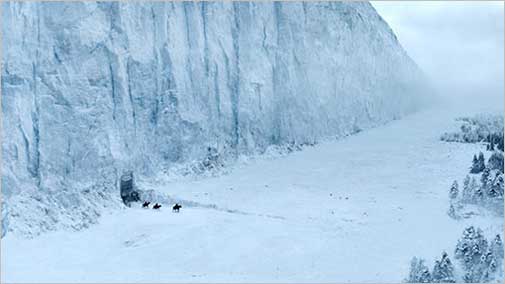
Here is one of my favorite scenes from this series. All the parts of this note-character building, good directing, extra time for conversations and all that-come together in scenes like this. Scenes like this are why Game of Thrones is so bloody good. (Sampler.)


It's just... I have rarely, if ever, seen anything like that scene on a network show. Game of Thrones tosses scenes like these off without trying.

Here's one more, my favorite thus far, and then I swear I'm done. Enjoy if it suits you. Myself, I highly recommend both the scene and the show.


*Daniel Minahan directed the sixth episode, which I haven't seen as of this writing.

Tuesday, May 24, 2011

What We Should Do About Yucca Mountain

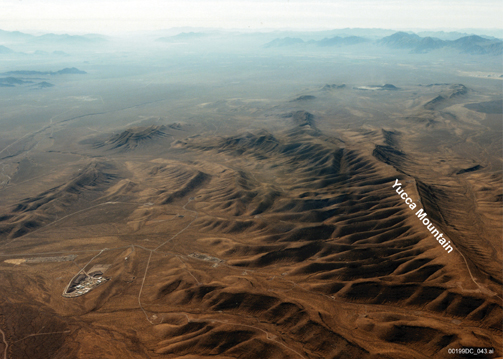
The last time I checked, there was no funding for the continued development, study of and construction of nuclear waste storage facilities at the much-debated Yucca Mountain in President Obama's fiscal year 2011 budget. The Department of Energy has chosen to try and shut down the site altogether, but as of this writing, it's being blocked in court by lawsuits from the states who would probably be next in line to have the nuclear waste repository in their territory if Yucca falls through.

The idea of a permanent nuclear waste repository is not only a bad one, it is something that humanity is fundamentally unable to build. Instead of trying to determine whether Yucca Mountain will be able to safely store nuclear waste for the next million years, we should be putting the time and money earmarked for Yucca into research into spent nuclear fuel (SNF) reprocessing technologies.


Here's my train of thought on the subject:

1. The U.S. government has spent north of $9 billion, as well as over three decades' worth of scientific reports and research, on studying Yucca Mountain and trying to determine whether it will be safe to store nuclear waste there for up to a million years in the future. Yucca was originally selected from a list of the nine most promising sites in the continental U.S., using the criteria of long-term tectonic stability, distance from major population centers, and political will. We have spent an amazing amount of time and money to learn as much as we can about Yucca Mountain, and we have found that it is probably unsuitable for the requirements we've asked of it (for example, the mountain is supposed to be dry and solid, but geologists' boreholes found it to be full of water and honeycombed with cracks). After $9 billion and 33 years of study on the best candidate for long-term storage, if this place isn't suitable for a repository, it's reasonable to ask if anywhere is.

2. Nowhere is. It is a crazy thing to think that we can build a facility that will last for a million years. The hubris of it is staggering.


We simply don't know how to build for that length of time. Most consumer goods aren't supposed to last more than five years. Buildings, levees, bridges and so forth rust, rot and decay within a hundred or so years. Even dams and seawalls will eventually break down if untended in, say, the 235 years that the U.S. has been a country.

Let me say this plainly: the idea that we can design something that will still exist and perform its original function 1,000,000 years in the future--4,255 times the lifespan to date of the nation that created it--is sheer folly. We just don't know how to compensate for a million years of erosion.

How exactly do you design for the Colorado River?
3. That's the thing about Yucca. It's not that it's unsuitable for so-called short-term storage (say, a mere fifty or a hundred or a thousand years). The plan for Yucca Mountain has always been what I like to call a fire-and-forget storage facility. We throw the waste in here and then we never have to worry about it ever again. It's the political and scientific equivalent of lifting up a carpet and sweeping the mess underneath. Oh, you've invested trillions of dollars in a form of electric power that produces an unavoidable and dangerously lethal by-product? Never mind. We can just dump it in this mountain and forget about it.

Also, be sure not to think about the fact that existing plants have produced enough waste since they came online in the 1950s and '60s to fill up the not-yet-built repository by 2014. The politicians who came up with the idea for the repository seem to be thinking in the longest term possible, but ironically, they're not thinking about what happens a mere fifty years in the future. What happens to the waste that's produced after Yucca is full? Do we go through this whole weary mess again, research and design and wrangle over and finally build another repository, or do we simply throw up our hands, cry "Fuck this!" and launch it into the sun?

No, seriously. That's one idea that Congress considered before Yucca was authorized.


4. Fine, a permanent repository isn't the answer. So what should we do?

My answer is twofold. First, instead of one centralized repository for all the waste in the U.S., build several regional storage facilities around the country. This would minimize the distance that the waste travels (since there are very real risks in transporting waste any distance) and, by moving the waste from 104+ separate sites to, say, 10 facilities, it would make the waste that much more secure against theft or terrorism. These facilities don't have to be inside mountains, for their purpose is not to store the waste indefinitely. Rather, they would store the waste until we have the technology to recycle it and turn it into power.

Sound fanciful? We could do it today if the proper facilities were set up. Reprocessed waste can yield up to 25% of the energy of the original fuel, through recycling of unused uranium-235 and plutonium-239 in an ordinary nuclear reactor (not to mention the U-238). This greatly reduces the volume of waste, leaving behind only volatile fission by-products. Even those could potentially be reused with the adoption of a closed nuclear fuel cycle.

So if it's that easy to reprocess waste, why haven't we done it? There are three main reasons. The first is President Carter's policy decision in the 1970s to curtail reprocessing technology in the U.S., in an effort to convince the world to do the same (which did not work). Every succeeding President has followed this policy. They did this because of the second reason; P-239, produced as a by-product in nuclear plants, can be used in nuclear weapons. However, inside the U.S., the risk of this is extremely low.

Reason III is good old economics. Right now, it is much cheaper to mine natural uranium than to reuse SNF, so there has been no real civilian push to build domestic reprocessing plants (although many foreign ones exist). But remember that $9 billion we've already spent on Yucca Mountain? The U.S. government has been willing to spend taxpayers' dollars to try and find a solution for the problem of nuclear waste. Let's start spending that money where it will do the most good: in further research of reprocessing technology and construction of reprocessing facilities. We can remove an environmental and national security threat by reprocessing the waste, we can generate power while we're doing it, and we can help find a permanent solution to the problem of waste. It's a win-win-win for everyone involved.

And the U.S. map can stop being pockmarked with nuclear zits.